
Resources
Resources
Every module comes with extra resources you can explore on your own: videos, readings, practice activities and a checklist.
1. Welcome to the ARTS Journey
Module 11. Watch & Learn
Art Therapy in Action: Adolescents

- Purpose
- This video helps participants understand how art therapy can support adolescents in expressing emotions, exploring identity, and communicating experiences that may be difficult to explain with words. It introduces art as a safe and creative way to reflect on feelings, build self-awareness, and begin personal exploration. The video can also help participants see that creativity is not about making "perfect" artwork, but about using images, colours, symbols, and materials to express what is happening inside.
- Suggested use
- Before starting the module, to introduce the idea of art as a tool for self-expression and emotional awareness.
2. Read & Reflect
The Healing Power of Art
- Purpose
- This resource helps participants understand how creative activities such as drawing, painting, photography, poetry, and storytelling can support emotional expression, self-awareness, and wellbeing. UNICEF highlights that artistic activities can help young people express feelings that may be difficult to put into words.
- Estimated reading time
- 10 minutes
- Reflection question
- What is one idea from this resource that you would like to try in your daily life?
3. Practise on Your Own
Three-Minute Creative Check-In
- Purpose
- This activity strengthens grounding, emotional awareness, and stress management. It helps participants pause, notice how they are feeling, and express their emotions through a quick creative response using words, colours, movement, or sound.
- Access information/link
- No external link is needed. Set a timer for three minutes. Ask yourself: "What am I feeling right now?" Then choose one way to express it: draw a colour or shape, write three words, make a small movement, hum a sound, or take a photo of something that matches your mood.
- Suggested frequency
- Daily or as needed, especially before or after stressful moments.
4. Try This Challenge
- Note
- Choose one small action to practise before moving on to the next module.
- My action step
- When will I try it?
5. If You Need Additional Support
- Note
- Remember that self-help resources are not a replacement for professional support. If you are experiencing ongoing distress or feel overwhelmed, consider reaching out to:
- A trusted adult, friend, or family member;
- A youth worker, teacher, or community professional;
- Local mental health or support services available in your area.
Resource checklist
Before moving on, ask yourself:
2. Discovering Your Emotions Through Art
Module 21. Watch & Learn
How to draw emotions with lines
- Purpose
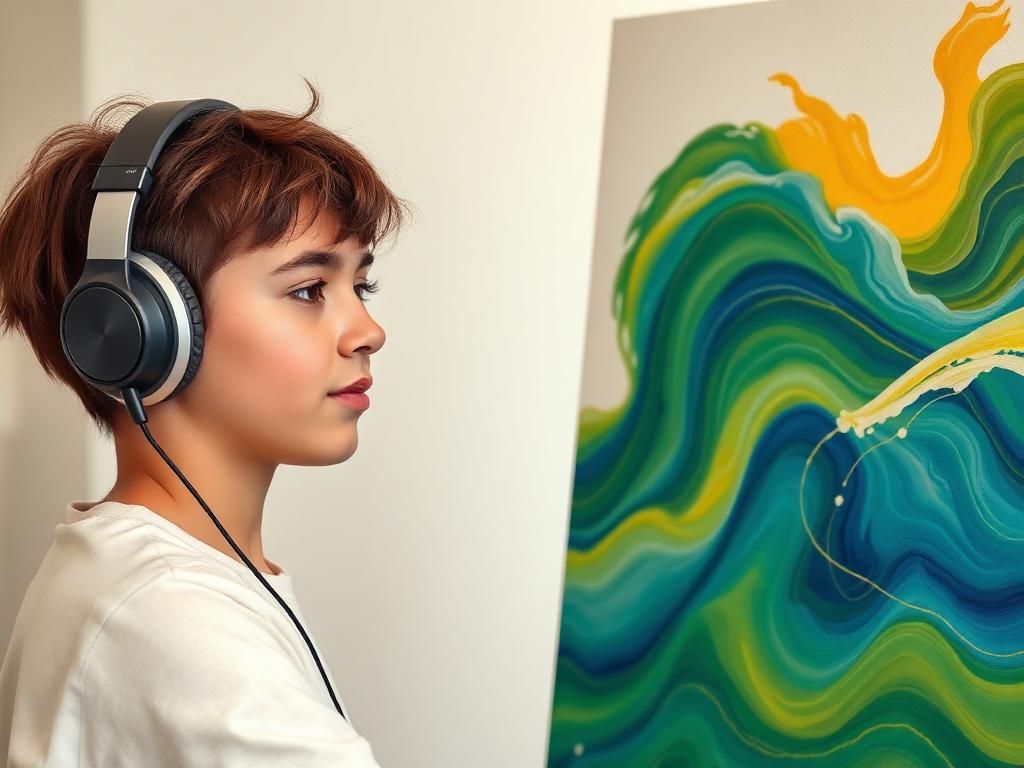
- The video gives an easy, step-by-step explanation of how to start expressing emotions on paper. It provides a sense of structure and control when feeling overwhelmed or not knowing what to draw at the beginning.
- Suggested use
- During moments of stress or reflection
2. Read & Reflect
How Art Supports Good Mental Health in Kids and Teens
- Purpose
- This article explains that when you are stressed or anxious, your heavy emotions can make you feel like you are closing inward. It shows that picking up a paintbrush, pencil, or marker does the exact opposite: it takes a complicated feeling from the inside and puts it on the outside. The text proves that using colors and shapes gives you a safe, private language to communicate how you feel without needing to find the perfect words.
- Estimated reading time
- 3-5 minutes
- Reflection question
- The article notes that creating art acts like a deep breath, giving your brain a chance to look at your emotions more objectively. Looking back at the scribble activity you just did, what did your choice of lines or colors show you about how you are feeling right now?
3. Practise on Your Own
Box Breathing Doodles
- Purpose
- The activity strengthens stress management and grounding by combining a physical breathing exercise with the physical action of drawing to calm an overactive nervous system.
- Access information/link
- Find a piece of paper and a pen. Draw a straight line while breathing in for 4 seconds, draw a second line down while holding the breath for 4 seconds, draw a third line across while exhaling for 4 seconds, and draw a final line up to close the box while holding for 4 seconds. Repeat the process until the page is filled with squares.
- Suggested frequency
- As needed (during moments of high stress or anxiety)
4. Try This Challenge
- Note
- Choose one small action to practise before moving on to the next module.
- Example
- The next time I feel overwhelmed by schoolwork or stress, I will grab a scrap piece of paper and spend exactly 3 minutes scribbling dark, heavy, or chaotic lines until the pen runs out of paper space, physically letting the worry out of my head.
- My action step
- When will I try it?
5. If You Need Additional Support
- Note
- Remember that self-help resources are not a replacement for professional support. If you are experiencing ongoing distress or feel overwhelmed, consider reaching out to:
- A trusted adult, friend, or family member;
- A youth worker, teacher, or community professional;
- Local mental health or support services available in your area.
Resource checklist
Before moving on, ask yourself:
3. Visual Expression: Drawing and Creating
Module 31. Watch & Learn
The Art Assignment: Video series

- Purpose
- These videos help participants understand that art is not about skill or talent—it is about connection, expression, and meaning. It encourages viewers to engage with creativity without fear of judgment.
- Suggested use
- Before starting the module, to open up and get into a creative mindset.
2. Read & Reflect
"Why Drawing Is Good for You"
- Purpose
- Reinforces the idea that drawing—even simple doodling—has real benefits for mental health, focus, and emotional regulation. Accessible and non-technical, written for a general audience.
- Reading time
- Approximately 5–7 minutes
- Reflection question
- What is one idea from this article that you would like to try in your daily life? For example: doodling while listening in class, or keeping a small sketchbook nearby for stressful moments.
3. Practise on Your Own
Sketchbook journalling – the daily mood drawing habit
- Purpose
- Strengthens emotional awareness and self-regulation. Each day, spend 3–5 minutes drawing a simple image, shape, or colour palette that represents how you feel. Over time you will start to notice patterns in your moods and find it easier to identify your emotions.
- Suggested frequency
- Daily, or as needed—especially during moments of stress, boredom, or emotional overload.
4. Try This Challenge
- Suggested challenge
- At the end of today, take 5 minutes to draw one image, shape, or pattern that represents how your day felt. Keep it—and try again tomorrow. By the end of the week, look back at all five and see what you notice.
- My action step
- When will I try it?
5. If You Need Additional Support
- Note
- Remember that self-help resources are not a replacement for professional support. If you are experiencing ongoing distress or feel overwhelmed, consider reaching out to:
- A trusted adult, friend, or family member;
- A youth worker, teacher, or community professional;
- Local mental health or support services available in your area.
Resource checklist
Before moving on, ask yourself:
4. Music and Sound: Expressing Feelings
Module 41. Watch & Learn
How Music Influences our Emotions, Feelings, and Behaviors — Dr. Amy Belfi (TEDxMissouriS&T)

- Purpose
- This talk helps you understand why a song can change how you feel within seconds. Neuroscientist Amy Belfi explains how quickly our brains decide whether we like a piece of music, and how closely music is tied to memory, mood, and emotion. It is a reminder that your reaction to a song is real and personal — you do not need to explain or justify it to anyone.
- Suggested use
- Before starting the module, to introduce the connection between sound and emotion.
2. Read & Reflect
How teenagers use music to deal with emotions
- Purpose
- This article explains how young people use music to name and process what they are feeling — how it can lower stress, calm the body, and make you feel less alone. It is also honest about the other side: playing sad or angry songs on repeat can sometimes keep you inside a mood instead of helping you move through it. It encourages you to notice how you use music, not only what you listen to.
- Estimated reading time
- 5 minutes
- Reflection question
- Think of the song you reach for most often when you feel low. Does it help you move through the feeling, or does it keep you in it?
3. Practise on Your Own
Three-Song Mood Shift
- Purpose
- This activity strengthens emotional awareness and mood regulation. Instead of forcing yourself to feel better straight away, you meet your mood where it is and move it gradually — a technique often used in music therapy.
- Access information
- No external link is needed. Build a short playlist of three songs in any app you already use. Song 1 matches how you feel right now — do not fight the mood. Song 2 sits somewhere in between. Song 3 is where you would like to end up: calmer, lighter, or more energised. Listen to all three in order, without skipping.
- Suggested frequency
- As needed — after school, before sleep, or whenever a mood feels stuck.
4. Try This Challenge
Choose one small action to practise before moving on to the next module.
5. If You Need Additional Support
- Note
- Remember that self-help resources are not a replacement for professional support. If you are experiencing ongoing distress or feel overwhelmed, consider reaching out to:
- A trusted adult, friend, or family member;
- A youth worker, teacher, or community professional;
- Local mental health or support services available in your area.
Resource checklist
Before moving on, ask yourself:
5. Stories and Role-Play: Exploring Identity
Module 51. Watch & Learn
Developing Empathy Through Storytelling

- Purpose
- This video helps participants understand how storytelling can build empathy, creativity, and perspective-taking. It shows how stories allow people to explore different lives, emotions, and experiences, while also reflecting on their own identity and values.
- Suggested use
- Before starting the module, to introduce the connection between stories, empathy, and identity. It can also be used after completing the module to reflect on how storytelling helped participants understand themselves or others better.
2. Read & Reflect
YoungMinds – Self-esteem and Believing in Yourself
- Purpose
- This resource reinforces ideas connected to identity, confidence, self-image, and personal strengths. It helps participants think about how they see themselves and how they can develop a kinder and more supportive inner voice.
- Link
- https://www.youngminds.org.uk/young-person/coping-with-life/self-esteem-and-believing-in-yourself/
- Estimated reading time
- 10 minutes
- Reflection question
- What is one strength, value, or quality you would like to recognise more in yourself?
3. Practise on Your Own
Character Perspective Journal
- Purpose
- This activity strengthens empathy, emotional awareness, perspective-taking, and self-reflection. It helps participants imagine how another person might think or feel in a situation, while also noticing how their own experiences and values influence the story.
- Access information
- No external link is needed. Use a notebook, paper, or digital notes app. Choose a fictional character or create your own. Write a short journal entry from the character's point of view, beginning with: "Today I felt..." or "The challenge I am facing is..."
- Suggested frequency
- Weekly or as needed, especially when reflecting on difficult situations, relationships, or choices.
4. Try This Challenge
- Instructions
- Choose one small action to practise before moving on to the next module.
- My action step
- When will I try it?
5. If You Need Additional Support
- Note
- Remember that self-help resources are not a replacement for professional support. If you are experiencing ongoing distress or feel overwhelmed, consider reaching out to:
- A trusted adult, friend, or family member;
- A youth worker, teacher, or community professional;
- Local mental health or support services available in your area.
Resource checklist
Before moving on, ask yourself:
6. Movement and Body Expression
Module 61. Watch & Learn
3 Somatic Exercises for a Nervous System Reset (by Alma)
- Purpose
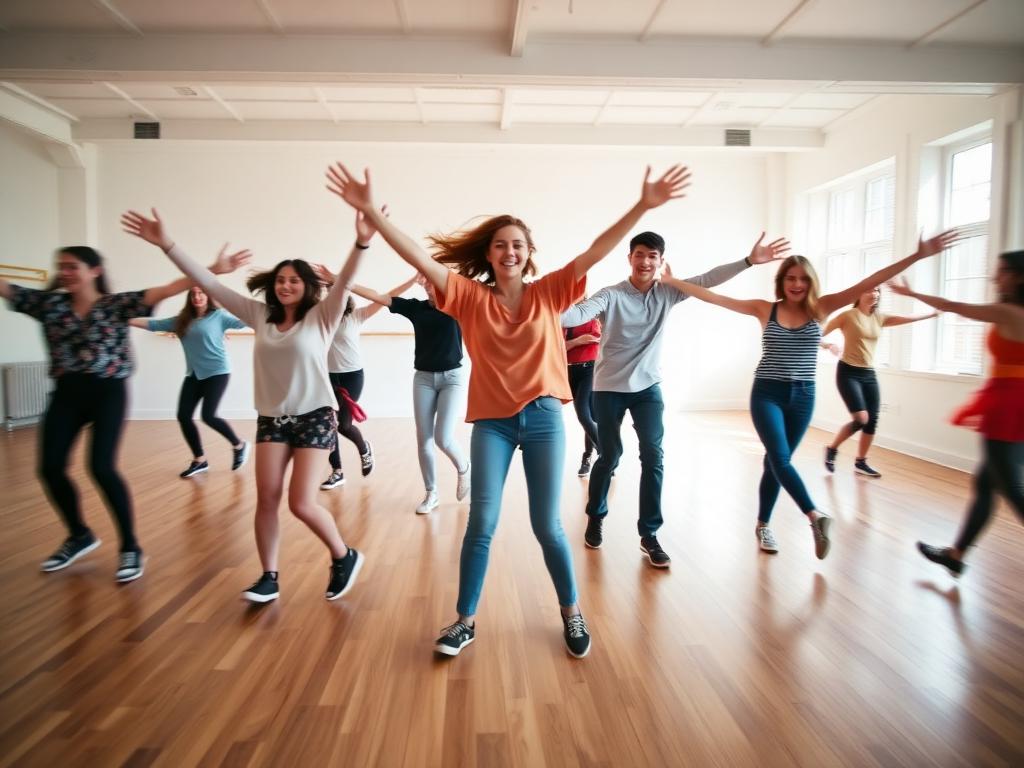
- This video guides you through three quick somatic movements (the Salamander, the Baby Octopus, and the Armpit Hug). It helps you understand and practice how gentle, mindful movements may help you feel calmer and more grounded when you are under stress. You will learn to watch for your body's natural signs of release, like a deep sigh, a swallow, or a yawn.
- Suggested use
- During moments of stress or reflection, whenever you feel anxious, physically tense, or need an immediate mental reset.
2. Read & Reflect
Move Your Body, Free Your Mind: Shifting Your Mental State
- Purpose
- This article reinforces that your body and brain are completely connected, meaning even a small physical shift may support a gradual improvement in how you feel. It strips away the pressure of traditional workouts, showing that you do not need to be "athletic" to use rhythm, stretching, and free-flowing motion to combat stress and build self-esteem.
- Estimated reading time
- 3-5 minutes
- Reflection question
- While this article mentions traditional sports, it highlights that "movement is for every body," including simply stretching to music or dancing alone in your room. When you want to clear your head without any pressure or anyone watching, what does your ideal "private movement space" look like?
3. Practise on Your Own
5-Minute Free-Flow Playlist
- Purpose
- This activity strengthens grounding, emotional awareness, and healthy stress management. It gives you a reliable, daily routine to check in with your body and physically shake off whatever you are carrying.
- Access information
- Create a personal playlist of just 3 songs: one slow and calming, one intense or high-energy, and one that feels joyful or free.
- Suggested frequency
- Daily or as needed whenever your brain feels cluttered.
4. Try This Challenge
- Instructions
- Choose one small action to practise before moving on to the next module.
- Suggested challenge
- As soon as you get out of bed, try to spend 60 seconds shaking out your hands, arms, and legs to wake up your body and clear away any grogginess before starting the day.
- My action step
- When will I try it?
5. If You Need Additional Support
- Note
- Remember that self-help resources are not a replacement for professional support. If you are experiencing ongoing distress or feel overwhelmed, consider reaching out to:
- A trusted adult, friend, or family member;
- A youth worker, teacher, or community professional;
- Local mental health or support services available in your area.
Resource checklist
Before moving on, ask yourself:
7. Creating Together: Collaborative Art
Module 71. Watch & Learn
One year of turning the world inside out — JR (TED)

- Purpose
- This talk shows what happens when thousands of people around the world contribute to one shared artwork. Artist JR invited people to send in portraits and paste them up in their own communities, and the result shows how a creative act becomes something much bigger when many people add to it. It is a good reminder that in collaborative art your contribution does not have to be skilled — it has to be yours.
- Suggested use
- Before starting the module, to see collaborative art working on a large scale.
2. Read & Reflect
Can Engaging in Art Help Address Loneliness?
- Purpose
- This article summarises research on why making art with other people helps. People who create are more likely to receive social and emotional support and to spend time with friends and family, and brain areas linked to social connection are active when we engage with art. It reinforces the main idea of this module: the point of a shared artwork is the connection, not the result.
- Estimated reading time
- 4–5 minutes
- Reflection question
- When did you last make something together with other people? What did doing it together give you that doing it alone would not have?
3. Practise on Your Own
The Add-On Drawing
- Purpose
- This activity strengthens communication, trust, and shared creativity, and it works even when you cannot get a group together in one room. It also shows you how much a piece changes once someone else has a say in it.
- Access information
- No external link is needed. Start something on paper or in a shared notes or drawing app: add one shape, line, or colour, then pass it to a friend, sibling, or classmate and ask them to add one thing without discussing it first. Keep passing it back and forth over a few days. When it feels finished, look at it together and each name one part you would never have drawn yourself.
- Suggested frequency
- Weekly, or whenever you want a low-pressure way to connect with someone.
4. Try This Challenge
Choose one small action to practise before moving on to the next module.
5. If You Need Additional Support
- Note
- Remember that self-help resources are not a replacement for professional support. If you are experiencing ongoing distress or feel overwhelmed, consider reaching out to:
- A trusted adult, friend, or family member;
- A youth worker, teacher, or community professional;
- Local mental health or support services available in your area.
Resource checklist
Before moving on, ask yourself:
8. Reflection and Personal Growth
Module 81. Watch & Learn
The Power of Self-Reflection Ted-Talk

- Title
- The Power of Self-Reflection Ted-Talk
- Purpose
- Explains how self-reflection can help young people recognise their strengths, celebrate progress, and identify creative practices that support their well-being.
- Suggested use
- After completing the module
2. Read & Reflect
How and Why Does Creativity Support Well-Being? New Learnings
- Title
- How and Why Does Creativity Support Well-Being? New Learnings
- Purpose
- Explains how creativity can positively support well-being and personal growth.
- Link
- https://whatworkswellbeing.org/blog/how-and-why-does-creativity-support-wellbeing-new-learnings/
- Estimated reading time
- 5-10 minutes
- Reflection question
- Which creative activity would you like to continue using, and why?
3. Practise on Your Own
My Creative Growth Journal
- Tool or activity name
- My Creative Growth Journal
- Purpose
- Strengthens self-awareness and reflection by encouraging participants to regularly notice achievements, emotions, and personal strengths.
- Access information
- https://mycg.framer.website/
- Suggested frequency
- Weekly.
4. My Creative Commitment
Choose one small promise to yourself that will help you continue expressing yourself creatively.
5. If You Need Additional Support
- Note
- Remember that self-help resources are not a replacement for professional support. If you are experiencing ongoing distress or feel overwhelmed, consider reaching out to:
- A trusted adult, friend, or family member;
- A youth worker, teacher, or community professional;
- Local mental health or support services available in your area.
Resource checklist
Before moving on, ask yourself: