
Module 2
Discovering Your Emotions Through Art
Ever feel like you are carrying around a heavy backpack of emotions, but you just can't find the right words to explain what's inside?
Developed by: YOMN
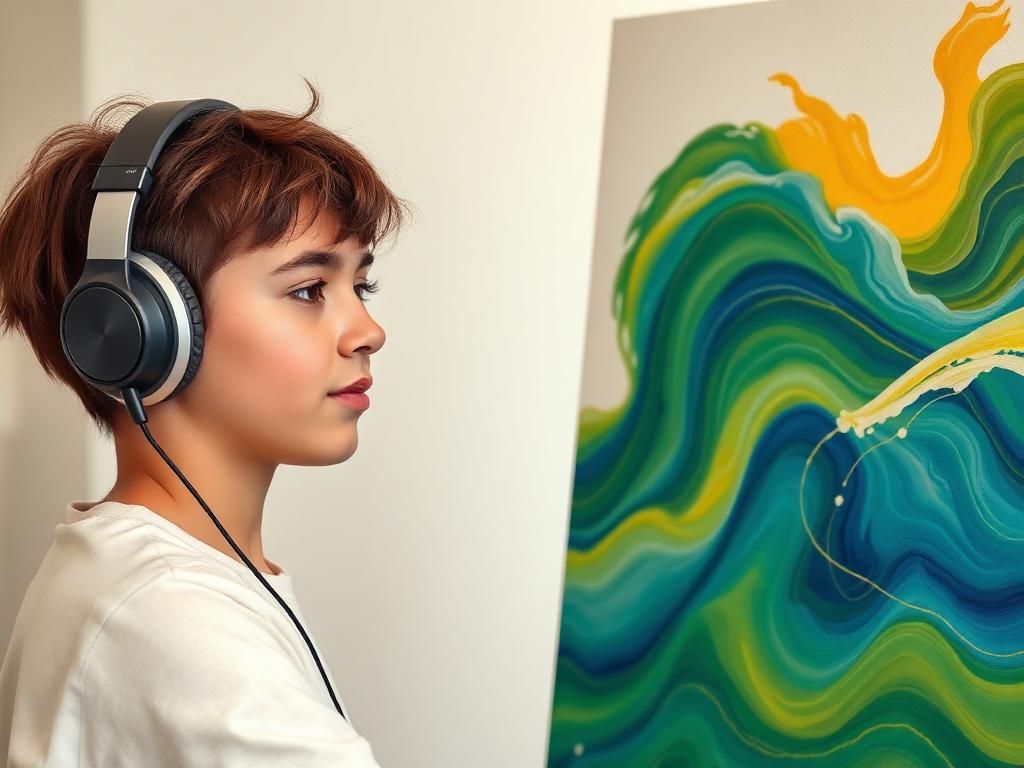
Introduction
Ever feel like you are carrying around a heavy backpack of emotions, but you just can't find the right words to explain what's inside? You aren't alone. Growing up comes with a lot of big feelings—stress from school, drama with friends, or just random mood swings.
That is where art comes in. Art is like a secret language. When talking feels like too much work, picking up a paintbrush, sketching a doodle, or making a playlist gives your emotions a way out. It gives you a safe, quiet space to untangle your mind and just relax.
Key Idea
Think about it: we already pair feelings with art every day. You might say you are "feeling blue," "seeing red" when you're mad, or listening to a heavy, dark song when you are stressed.
Emotions aren't just thoughts in your head—they have textures, rhythms, and colors. A burst of joy might look like bright yellow paint splatters, while anxiety might feel like a tightly tangled ball of scribbled black lines. By using colors, shapes, or sounds, you can take a complicated feeling from the inside and place it on the outside where it can't overwhelm you anymore.
Emotion Identification Activity
Emotion Identification Activity
Let's try a quick, simple activity to see how this works. You don't need to be an "artist" to do this, anyone can scribble!
- 1What you need: A piece of paper and anything to draw with (pens, colored pencils, markers, or even a digital drawing app).
- 2Step 1: Close your eyes for a few seconds. Take a deep breath. Focus on how you are feeling right now in this exact moment. Is it tired? Anxious? Excited? Bored?
- 3Step 2: Pick a color that matches that feeling. Don't think about it too much—just go with your gut.
- 4Step 3: Open your eyes and start drawing lines, shapes, or patterns that match your emotion. If you are angry, your lines might be sharp and heavy. If you are calm, they might be smooth and wavy. Fill the page until you feel like stopping.
Take a look at your scribble and think about these quick questions: Does looking at your drawing match the energy of the feeling you had inside? Did your hand move fast and heavy, or slow and light?
Interactive Task
Before we move on, let's map out your current mood:
If your mood right now was a sound, what would it be?
Tip: There is no bad option here! Whatever sound you picked is exactly where you are supposed to be right now.
Reflection Prompt
Reflection
Now that you have created your scribble and picked your sound, let's take a second to look at the whole picture.
- How did it feel to let your hands do the talking instead of your voice?
- Did you notice any tension leaving your body while you were creating?
- What surprised you the most about the colors, shapes, or sounds you chose today?
Quiz Question
True or False?
Statement: You have to be good at drawing or painting for art to help you manage your stress and emotions.
Additional self-help resources
1. Watch & Learn
How to draw emotions with lines
- Purpose
- The video gives an easy, step-by-step explanation of how to start expressing emotions on paper. It provides a sense of structure and control when feeling overwhelmed or not knowing what to draw at the beginning.
- Suggested use
- During moments of stress or reflection
2. Read & Reflect
How Art Supports Good Mental Health in Kids and Teens
- Purpose
- This article explains that when you are stressed or anxious, your heavy emotions can make you feel like you are closing inward. It shows that picking up a paintbrush, pencil, or marker does the exact opposite: it takes a complicated feeling from the inside and puts it on the outside. The text proves that using colors and shapes gives you a safe, private language to communicate how you feel without needing to find the perfect words.
- Estimated reading time
- 3-5 minutes
- Reflection question
- The article notes that creating art acts like a deep breath, giving your brain a chance to look at your emotions more objectively. Looking back at the scribble activity you just did, what did your choice of lines or colors show you about how you are feeling right now?
3. Practise on Your Own
Box Breathing Doodles
- Purpose
- The activity strengthens stress management and grounding by combining a physical breathing exercise with the physical action of drawing to calm an overactive nervous system.
- Access information/link
- Find a piece of paper and a pen. Draw a straight line while breathing in for 4 seconds, draw a second line down while holding the breath for 4 seconds, draw a third line across while exhaling for 4 seconds, and draw a final line up to close the box while holding for 4 seconds. Repeat the process until the page is filled with squares.
- Suggested frequency
- As needed (during moments of high stress or anxiety)
4. Try This Challenge
- Note
- Choose one small action to practise before moving on to the next module.
- Example
- The next time I feel overwhelmed by schoolwork or stress, I will grab a scrap piece of paper and spend exactly 3 minutes scribbling dark, heavy, or chaotic lines until the pen runs out of paper space, physically letting the worry out of my head.
- My action step
- When will I try it?
5. If You Need Additional Support
- Note
- Remember that self-help resources are not a replacement for professional support. If you are experiencing ongoing distress or feel overwhelmed, consider reaching out to:
- A trusted adult, friend, or family member;
- A youth worker, teacher, or community professional;
- Local mental health or support services available in your area.
Resource checklist
Before moving on, ask yourself: