Module 7
Creating Together: Collaborative Art
Creating art together can help people connect without needing to explain everything with words.
Developed by: SMART
Introduction
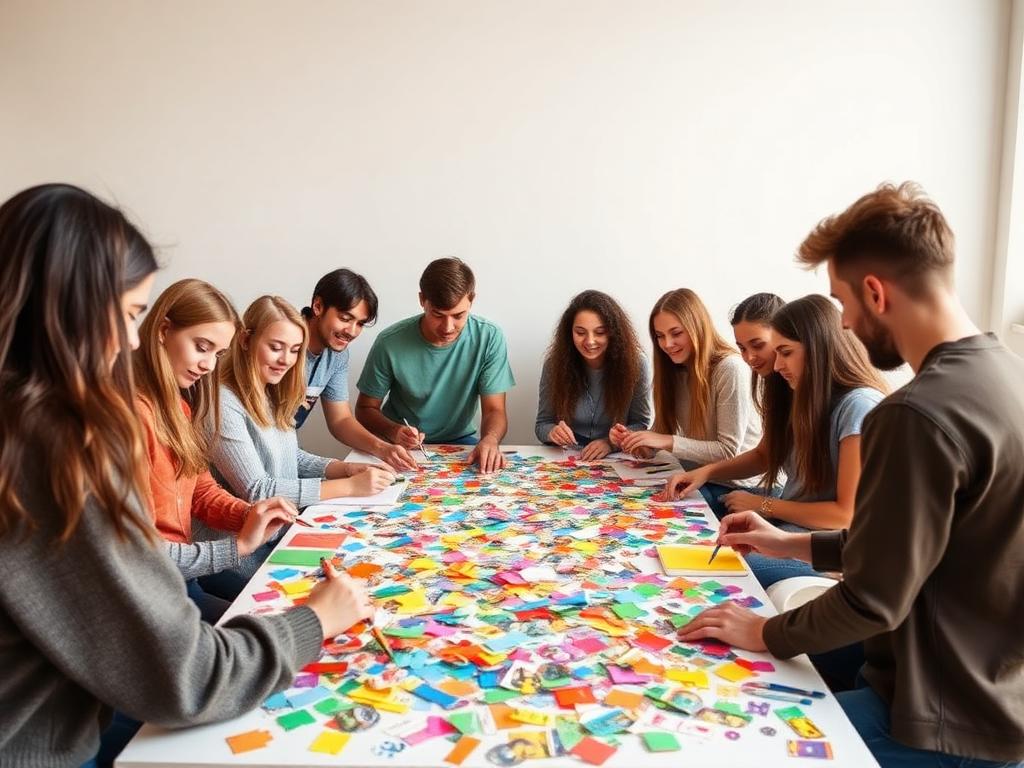
Creating art together can help people connect without needing to explain everything with words. When a group creates one shared artwork, everyone brings something different: an idea, a colour, a symbol, a memory, or a feeling. This can strengthen trust, communication, and respect because the final result belongs to everyone, not just one person.
Collaborative art also helps you notice how you work with others. Do you prefer to lead, observe, add small details, suggest ideas, or support the group quietly? All roles matter. In this module, you will explore how creating something together can help build relationships, include different voices, and show that each contribution has value.
Group Activity
Activity: Our Shared Mood Map
In this activity, your group will create one shared artwork that represents the emotions, energy, and ideas of the group. The aim is not to make something "perfect", but to create something together where everyone contributes in their own way.
- 1Sit together as a group and choose one theme, such as: our group energy today, what helps us feel safe, what connection looks like, or our strengths as a group.
- 2Each person adds one symbol, colour, word, shape, or small drawing to the shared artwork. You can draw, write, cut, paste, or arrange materials.
- 3After the first round, look at what is already there. Then add something that connects your contribution to someone else's. This could be a line, colour, pattern, symbol, or shape.
- 4Continue until the artwork feels complete enough. It does not need to be full or neat.
- 5As a group, look at the final piece and notice what stands out. What emotions, colours, or connections do you see?
You will need:
• one large sheet of paper, flipchart paper, or cardboard
• markers, coloured pencils, sticky notes, magazines, or recycled paper
• optional: digital tool such as Canva, Jamboard alternative, Padlet, or a shared digital whiteboard
Optional digital version: Create the same artwork as a digital collage. Each person adds one image, colour, icon, short word, or symbol to a shared online board. Important: You do not have to explain your contribution if you do not want to. You can simply say, "I chose this because it felt right."
Materials Needed
- One large sheet of paper, flipchart paper, cardboard, or a shared digital board
- Markers, coloured pencils, crayons, sticky notes, magazines, recycled paper, or any simple creative materials available
- Glue or tape, if using collage materials
- Optional: scissors, printed images, fabric pieces, natural or recycled objects
- Optional digital version: Canva, Padlet, Miro, Google Jamboard alternative, or any shared online whiteboard
The activity should remain simple and low-resource. Participants should be able to contribute even with only paper and pens.
Step-by-Step Instructions
Facilitating the group activity
- 1Introduce the activity: Explain that the group will create one shared artwork together. Remind participants that the aim is not to make a perfect piece of art, but to show different emotions, ideas, and voices in one shared space.
- 2Choose a shared theme: Invite the group to choose one theme, such as: what helps us feel connected, our group energy today, what safety feels like, or our strengths as a group.
- 3Start with individual contributions: Give each participant a few minutes to add one colour, shape, symbol, word, image, or small drawing to the shared artwork. They can choose something simple and do not need to explain it.
- 4Build connections: After everyone has added something, invite participants to look at the artwork and add something that connects their contribution to someone else's. This can be a line, pattern, colour, symbol, or repeated shape.
- 5Add a second layer: Ask the group to add details that show how they want the group to feel: more calm, more open, more energetic, more supportive, or more connected.
- 6Observe the final artwork together: Place the artwork where everyone can see it. Ask the group to silently observe it for one minute.
- 7Share only if comfortable: Invite participants to share one thing they notice in the artwork. They can speak about colours, shapes, emotions, or connections. Sharing should always be optional.
- 8Close the activity: End by reminding the group that each contribution helped shape the final result. Emphasise that collaborative art works best when different styles, ideas, and levels of confidence are respected.
Reflection Prompt
Reflection
Think about how the artwork changed because it was created by more than one person. You can reflect on these questions:
- What did someone else add that changed the final artwork in an interesting way?
- Did working together make the artwork easier, harder, or more meaningful?
- What did you notice about your role in the group?
- How did the group make space for different ideas?
You can share your answer aloud, write it down, or express it with one word, colour, or symbol.
Interactive Poll
Modules
How do you usually prefer to create?
Follow-up question: What helps you feel comfortable when creating with others?
Additional self-help resources
1. Watch & Learn
One year of turning the world inside out — JR (TED)
- Purpose
- This talk shows what happens when thousands of people around the world contribute to one shared artwork. Artist JR invited people to send in portraits and paste them up in their own communities, and the result shows how a creative act becomes something much bigger when many people add to it. It is a good reminder that in collaborative art your contribution does not have to be skilled — it has to be yours.
- Suggested use
- Before starting the module, to see collaborative art working on a large scale.
2. Read & Reflect
Can Engaging in Art Help Address Loneliness?
- Purpose
- This article summarises research on why making art with other people helps. People who create are more likely to receive social and emotional support and to spend time with friends and family, and brain areas linked to social connection are active when we engage with art. It reinforces the main idea of this module: the point of a shared artwork is the connection, not the result.
- Estimated reading time
- 4–5 minutes
- Reflection question
- When did you last make something together with other people? What did doing it together give you that doing it alone would not have?
3. Practise on Your Own
The Add-On Drawing
- Purpose
- This activity strengthens communication, trust, and shared creativity, and it works even when you cannot get a group together in one room. It also shows you how much a piece changes once someone else has a say in it.
- Access information
- No external link is needed. Start something on paper or in a shared notes or drawing app: add one shape, line, or colour, then pass it to a friend, sibling, or classmate and ask them to add one thing without discussing it first. Keep passing it back and forth over a few days. When it feels finished, look at it together and each name one part you would never have drawn yourself.
- Suggested frequency
- Weekly, or whenever you want a low-pressure way to connect with someone.
4. Try This Challenge
Choose one small action to practise before moving on to the next module.
5. If You Need Additional Support
- Note
- Remember that self-help resources are not a replacement for professional support. If you are experiencing ongoing distress or feel overwhelmed, consider reaching out to:
- A trusted adult, friend, or family member;
- A youth worker, teacher, or community professional;
- Local mental health or support services available in your area.
Resource checklist
Before moving on, ask yourself: